


Lightnings Live On
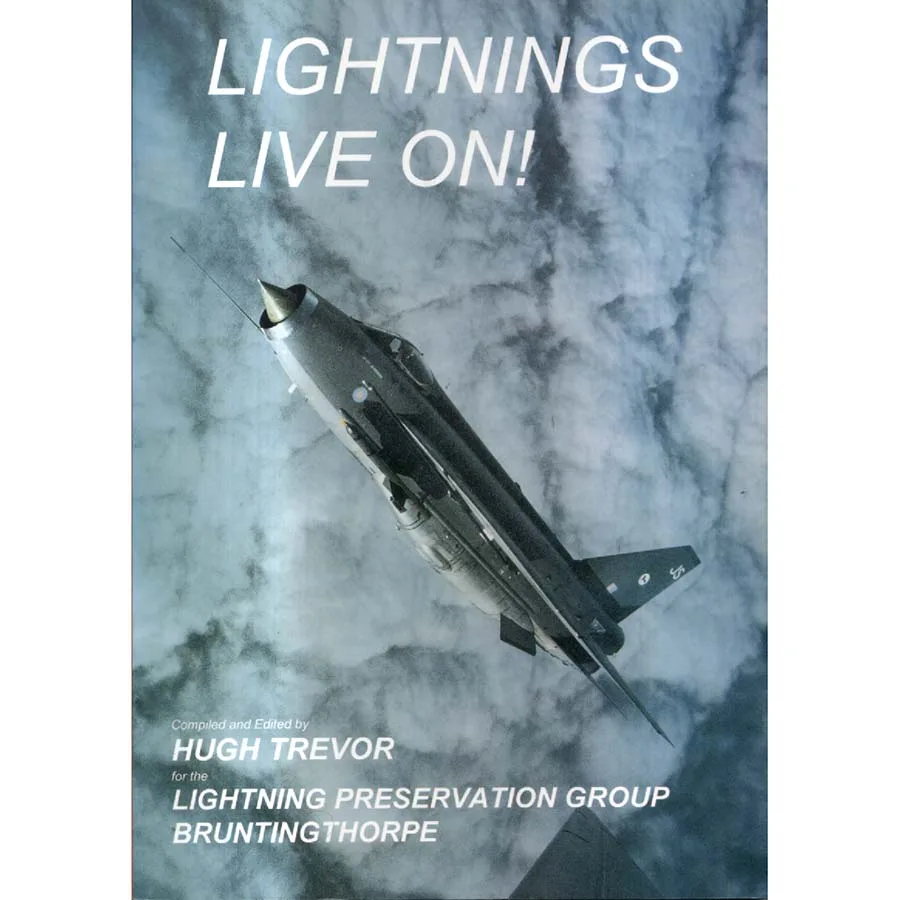
Publisher: Lightning Preservation Group
Format: Paperback
ISBN: 0952882906
Hugh Trevor’s Lightnings Live On is a book about the English Electric Lightning refusing, quite properly, to become merely past tense. Some aircraft retire quietly into museums, stand behind barriers, and spend the rest of their lives being dusted by people with laminated passes. The Lightning, being the Lightning, inspires a more emotional response: preservation groups, enthusiasts, spares hunts, restoration effort, technical devotion, memory, noise, and the collective belief that Britain’s vertical silver thunderbolt deserves better than being reduced to a photograph and a caption.
The Lightning was never a mild aircraft, and this book is about the afterlife of an unmild machine. Built as a supersonic interceptor, it had the sort of climb rate that made altitude seem negotiable and the sort of fuel appetite that made logistics feel spiritual. It was a Cold War alarm bell with wings, waiting on QRA to leap upwards at anything suspicious appearing on the radar. That such a machine should later be lovingly preserved by volunteers is entirely fitting. It takes a special aircraft to turn grown adults into caretakers of aluminium, Avons, paperwork and hope.
The Lightning Preservation Group sits at the heart of this story: the people who chose not merely to remember the aircraft, but to keep the thing alive in metal, systems, structure, paint and possibility. Preservation is often described romantically, but in practice it is a war against corrosion, missing parts, money, weather, regulations, storage, technical manuals, and the tragic discovery that nostalgia does not automatically loosen seized fasteners. Every surviving aircraft is a negotiation between memory and engineering, and engineering is rarely sentimental unless properly supervised.
There is a lovely irony in preserving a machine designed for instant reaction by means of slow patience. The Lightning once existed to launch in minutes, climb like a startled missile and intercept Cold War anxiety at height. Keeping one alive after service requires the opposite virtues: waiting, fundraising, recording, sourcing, cleaning, repairing, checking, explaining, and persuading the future that this absurdly beautiful fuel-to-noise converter matters. The aircraft was built for speed; its survival depends on stubbornness.
This is a book for Lightning enthusiasts, RAF watchers, preservation followers, Cold War aviation collectors and anyone who understands that aircraft do not really die when they leave service, provided enough people remain slightly unreasonable about them. It is about memory made practical: not just “wasn’t it marvellous?” but “where can we get that component, who has the drawings, and why is this panel being awkward?”
Good copy, as sold by Crappy Old Books. A solid little preservation volume, appropriately second-hand for a book about second lives. It may not produce reheat, howl down a runway, or make nearby sheep reconsider their choices, but it does carry the next best thing: the evidence that some machines are too distinctive to be allowed to fade politely.
Keep browsing: See more War books Other books by Hugh Trevor
